Vorbesteller
Neu
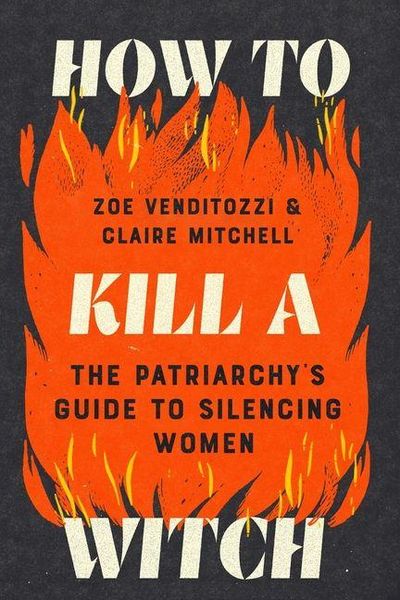
How to Kill a Witch The Patriarchy's Guide to Silencing Women
1-
- Hardcover
- Taschenbuch ausgewählt
- eBook
-
Sprache:Englisch
17,99 €
inkl. gesetzl. MwSt.,
Produktdetails
Einband
Taschenbuch
Erscheinungsdatum
28.07.2026
Seitenzahl
320
Maße (L/B/H)
21/14/2,1 cm
Gewicht
454 g
Sprache
Englisch
ISBN
978-1-4642-4125-3
Kundinnen und Kunden meinen
interesting subject with inapt writing
Stephanie aus Othmarsingen am 22.03.2026
Bewertungsnummer: 3084865
Bewertet: Buch (Taschenbuch)
First and foremost, I enjoyed getting to know more about the witch trials and killings in the 17th century. Especially some of the clarifying bits about how they most likely would have been killed - most weren’t burnt alive at the stake, as it’s liked to be portrayed in media, which is not to say that the actual processes were any better.
This book - as many other non-fiction books about brutal and sorrowful points in history - highlights the inability of mankind to TRULY learn from past mistakes.
While many would probably not believe in witches as they did back then (though there are still people that do), the witches as the social scapegoat are now just replaced by trans people or other ‘minorities’ who ought to be responsible for failings of our own or happenings we don’t yet have an explanation for.
It’s sad, really. And I’m not hopeful that humans will ever not act like that.
On a more positive note: Since I knew that this book was narrated by the two Scottish authors I knew I had to listen to it while reading alongside - I just love the Scottish accent, and listening to the book did increase my reading experience for sure.
However, as much as I was excited to read a book about this subject (and a book set mostly in Scotland), there are quite a few things that led to my three-star-rating:
- Though I know that you can’t always stay in super cronological order with non-fiction books, as some information needs to be had in order to understand earlier happenings, I found this book to be too cronologically jumbled.
- With this, it also brought many bits of information that were mentioned two or three times. Since this wasn’t a very difficult read with difficult language or anything, those second or third mentions were not necessary on many occasions, in my opinion.
- Also, you as a reader probably won’t forget that the authors are podcasters, as their writing reflects much of it. Many tellings and information sharing are done in an ‘on the nose’ kind of way, and some of the footnotes (which to me are there to explain a unlikely word more or give some more context to a sentence) were snarky and witty comments from the authors. I’m not saying that there shouldn’t be any comments as these, but since they’ve also incorporated some of them in the text itself, why not do it consistently that way?
- And these comments bring me to my last point: For me the way they approached this telling of these stories felt immature. I do think that one can talk about a devastating point in history with wit and humour while still transporting the dire and social circumstances. I don’t, however, think these authors did a good job at that.
All in all, I think that it’s a good book to get a general understanding in the matter of witch huntings back in the day but I also think that it could have grappled more with the history and be a tad more scientific.
Still, I know that there’s readers that prefer this kind of writing over a more analytical approach.
Kurze Frage zu unserer Seite
Vielen Dank für Ihr Feedback
Wir nutzen Ihr Feedback, um unsere Produktseiten zu verbessern. Bitte haben Sie Verständnis, dass wir Ihnen keine Rückmeldung geben können. Falls Sie Kontakt mit uns aufnehmen möchten, können Sie sich aber gerne an unseren Kund*innenservice wenden.
zum Kundenservice