Beschreibung
Produktdetails
Einband
Gebundene Ausgabe
Erscheinungsdatum
10.12.2025
Verlag
Elysian Dream® Occupational Wellness Institute(TM)Seitenzahl
286
Maße (L/B/H)
23,5/15,7/2,3 cm
Gewicht
768 g
Sprache
Englisch
EAN
9798994127292
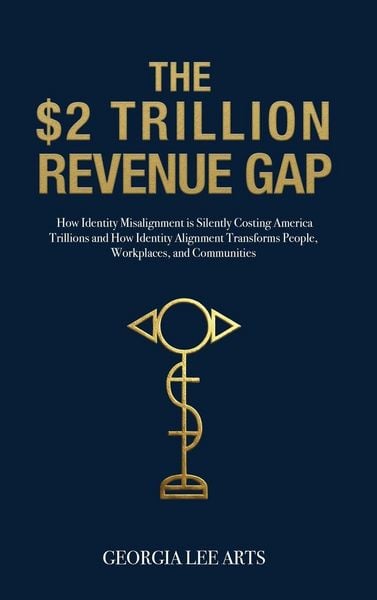
What if one of the largest hidden costs in the modern economy begins with something organizations and workforce systems rarely measure-identity? The $2 Trillion Revenue Gap(TM) presents Georgia Lee Arts's examination of the relationships among identity, work, workforce conditions, organizational structure, human functioning, and economic performance. Beginning with a U.S.-based economic inquiry and widening toward the global workforce, Arts asks what becomes visible when problems commonly attributed to individuals are examined within the larger systems in which people work. Drawing across organizational behavior, workforce economics, leadership, identity, occupational wellness, attachment, neurobiological functioning, and the Human Side of Work(TM), the book traces relationships among identity misalignment, structural conditions, culture, leadership failure patterns, disruption, disengagement, burnout, performance, retention, and economic loss. It challenges familiar explanations for workforce problems by examining not only what is happening within people, but also what may be happening around them and between them. Workplaces do more than organize labor. Roles, expectations, recognition, authority, relationships, culture, and organizational conditions can influence how people understand themselves, how they participate, and what becomes possible within a workforce. Viewed at scale, patterns that appear individual can become organizational-and organizational patterns can carry consequences into economies. The book also examines collaboration across difference. Modern workforces bring together people with different identities, roles, experiences, histories, perspectives, and ways of seeing. Arts challenges the assumption that effective collaboration requires sameness, asking instead what allows diverse groups of people to bring distinct knowledge and capacities toward shared outcomes. Difference can become a source of organizational capacity, but the conditions surrounding that difference matter. From the individual to the workforce, from the organization to the economy, and from a U.S.-based analysis toward global implications, The $2 Trillion Revenue Gap(TM) asks readers to reconsider what sits beneath familiar problems of performance, productivity, retention, wellness, and organizational effectiveness-and what conventional explanations may leave unseen. Published before Arts's later institutional work in occupational systems, The $2 Trillion Revenue Gap(TM) represents a foundational stage in her body of work examining identity, work and workforce systems, structural conditions, collaboration across difference, organizational patterns, human functioning, and economic outcomes-and the often-unseen relationships among them.
Noch keine Bewertungen vorhanden
Verfassen Sie die erste Bewertung zu diesem Artikel
Helfen Sie anderen Kundinnen und Kunden durch Ihre Meinung.
Kurze Frage zu unserer Seite
Vielen Dank für Ihr Feedback
Wir nutzen Ihr Feedback, um unsere Produktseiten zu verbessern. Bitte haben Sie Verständnis, dass wir Ihnen keine Rückmeldung geben können. Falls Sie Kontakt mit uns aufnehmen möchten, können Sie sich aber gerne an unseren Kund*innenservice wenden.
zum Kundenservice