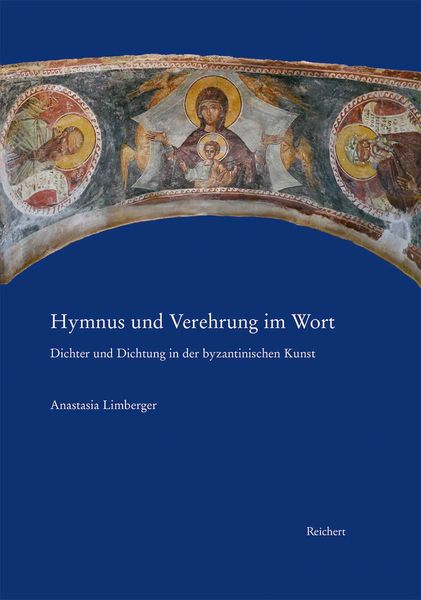
Hymnus und Verehrung im Wort. Dichter und Dichtung in der Byzantinischen Kunst
Aus der Reihe
Spätantike – Frühes Christentum – Byzanz
-
- Deutsch ausgewählt
129,00 €
inkl. gesetzl. MwSt.,
Beschreibung
Produktdetails
Einband
Gebundene Ausgabe
Erscheinungsdatum
16.03.2026
Verlag
Reichert, LSeitenzahl
252
Maße (L/B/H)
25/18/2 cm
Gewicht
665 g
Sprache
Deutsch
ISBN
978-3-7520-0899-9
Hymnographers occupy a prominent position in Byzantine ecclesiastical art, one that has hitherto been examined only in a fragmentary manner. The present study is devoted to their visual representation and function between the twelfth and fifteenth centuries. At its core lies the question of why certain poets of liturgical chant – John of Damascus, Kosmas Melodos, Joseph the Hymnographer, Theodore the Studite, and Theophanes Graptos – are accorded a distinguished status within monumental pictorial programmes, at times comparable to that of the Evangelists. By combining art-historical analysis with questions drawn from liturgical history and theology, the study redefines the role of hymnography as a structuring and meaning-generating element within Byzantine image programmes.
The first part examines the hymnographers with regard to their vitae, iconography, dress, and characteristic gestures. On this basis, the study identifies features by which they are recognisable as hymnographers, in particular specific gestures associated with singing and distinctive forms of headgear.
The second part is devoted to the pictorial contexts in which hymnographers appear. A key finding is their close association with sepulchral spaces and foundations: in such settings, they frequently function as ‘guardians of the dead’, accompanying the deceased patron in perpetual worship and attesting to his orthodoxy. In other image types, hymnographers assume a mediating role within New Testament scenes, particularly in the iconography of the Koimesis. Acting from within the pictorial field, they articulate and interpret the depicted events, bringing liturgical experience, visual form, and theological reflection into close alignment. They thus function as bridging figures between earthly and eschatological realms, as well as between the beholder and the image itself.
Particular attention is paid to the individually selected texts inscribed on their scrolls, which serve not merely as identifying attributes but intervene actively in the meaning of the image by interpreting, deepening, and commenting upon the scenes depicted. The hymnographers thus appear as visual embodiments of sung liturgical poetry and contribute significantly to the performative intensification of the church interior.
In its conclusion, the study interprets the function of the hymnographers in terms of a Byzantine form of ‘performatism’: through text, gesture, and positioning, they generate pictorial spaces that draw the viewer actively into the liturgical event. The study thereby offers a new contribution to the interrelation of hymnography, liturgy, and visual art, demonstrating that the depiction of hymnographers constitutes a deliberate and theologically highly coded element of Byzantine monumental painting.
The first part examines the hymnographers with regard to their vitae, iconography, dress, and characteristic gestures. On this basis, the study identifies features by which they are recognisable as hymnographers, in particular specific gestures associated with singing and distinctive forms of headgear.
The second part is devoted to the pictorial contexts in which hymnographers appear. A key finding is their close association with sepulchral spaces and foundations: in such settings, they frequently function as ‘guardians of the dead’, accompanying the deceased patron in perpetual worship and attesting to his orthodoxy. In other image types, hymnographers assume a mediating role within New Testament scenes, particularly in the iconography of the Koimesis. Acting from within the pictorial field, they articulate and interpret the depicted events, bringing liturgical experience, visual form, and theological reflection into close alignment. They thus function as bridging figures between earthly and eschatological realms, as well as between the beholder and the image itself.
Particular attention is paid to the individually selected texts inscribed on their scrolls, which serve not merely as identifying attributes but intervene actively in the meaning of the image by interpreting, deepening, and commenting upon the scenes depicted. The hymnographers thus appear as visual embodiments of sung liturgical poetry and contribute significantly to the performative intensification of the church interior.
In its conclusion, the study interprets the function of the hymnographers in terms of a Byzantine form of ‘performatism’: through text, gesture, and positioning, they generate pictorial spaces that draw the viewer actively into the liturgical event. The study thereby offers a new contribution to the interrelation of hymnography, liturgy, and visual art, demonstrating that the depiction of hymnographers constitutes a deliberate and theologically highly coded element of Byzantine monumental painting.
Kundinnen und Kunden meinen
Verfassen Sie die erste Bewertung zu diesem Artikel
Helfen Sie anderen Kund*innen durch Ihre Meinung
Kurze Frage zu unserer Seite
Vielen Dank für Ihr Feedback
Wir nutzen Ihr Feedback, um unsere Produktseiten zu verbessern. Bitte haben Sie Verständnis, dass wir Ihnen keine Rückmeldung geben können. Falls Sie Kontakt mit uns aufnehmen möchten, können Sie sich aber gerne an unseren Kund*innenservice wenden.
zum Kundenservice