Beschreibung
Produktdetails
Format
Kopierschutz
Nein
Family Sharing
Nein
Text-to-Speech
Nein
Erscheinungsdatum
02.02.2026
Herausgeber
Mir Ishfaq Nazir + weitereVerlag
SpringerSeitenzahl
449 (Printausgabe)
Dateigröße
9486 KB
Sprache
Englisch
EAN
9783032149718
Fish and other aquatic animals play an essential role in ensuring food and nutrition security in many countries where a significant portion of the population is poor and undernourished. These aquatic foods provide a rich source of high-quality protein, numerous micronutrients and fatty acids vital for human brain development. In low-income, food-deficit regions, fish is often the most affordable and commonly consumed animal-source food, making it a crucial component in diversifying diets that are otherwise heavily reliant on starchy staples. Additionally, fish consumption enhances food and nutrition security beyond its inherent nutrient content by facilitating the absorption of nutrients from plant-based foods in the diet. While fish is commonly associated with food security through its protein content, its true value lies in being a rich source of micronutrients and lipids. It provides easily digestible, high-quality proteins and healthy fats, along with essential nutrients like iodine, vitamin D, and calcium and serves as the primary source of omega-3 fatty acids in the human diet.
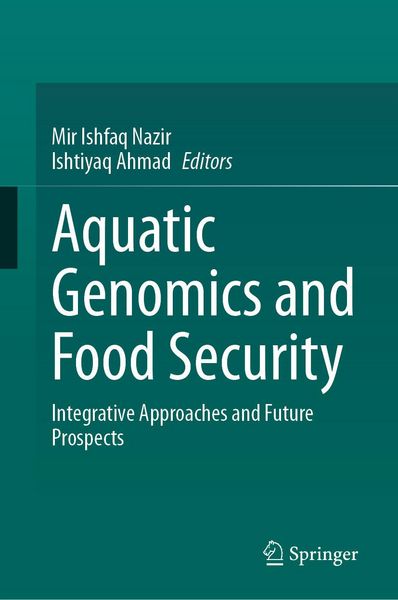
Aquatic Genomics and Food Security: Integrative Approaches and Future Prospects delves into state-of-the-art strategies, offering insights into omic technologies in aquaculture for sustainable practices and global food security. Nutrigenomics provides a comprehensive understanding of how nutrients impact gene regulation and the pathways involved in nutrient utilization. Omic technologies, such as transcriptome analyses during early developmental stages, reveal transcript levels and differential gene expression during fish ontogenetic development, shedding light on larval nutrition mechanisms. This comprehensive book delves into the application of proteomic technologies to understand the protein expression profiles in aquatic organisms, providing insights into growth, health, and disease resistance by highlighting how proteomics can optimize feed formulations, improve fish health, and enhance overall productivity. Additionally, advanced microbiome analyses through metagenomics are discussed, emphasizing the role of microbial communities in digestion and health. The importance of metabolomics is highlighted, showcasing how metabolite profiling identifies markers for nutrient utilization, leading to improved performance and higher production, thereby contributing to sustainable food security. The book seeks to integrate advanced omic approaches and future perspectives to optimize aquaculture nutrition, enhance fish health and growth, and support sustainable aquaculture practices for global food security.
Noch keine Bewertungen vorhanden
Verfassen Sie die erste Bewertung zu diesem Artikel
Helfen Sie anderen Kundinnen und Kunden durch Ihre Meinung.
Kurze Frage zu unserer Seite
Vielen Dank für Ihr Feedback
Wir nutzen Ihr Feedback, um unsere Produktseiten zu verbessern. Bitte haben Sie Verständnis, dass wir Ihnen keine Rückmeldung geben können. Falls Sie Kontakt mit uns aufnehmen möchten, können Sie sich aber gerne an unseren Kund*innenservice wenden.
zum Kundenservice