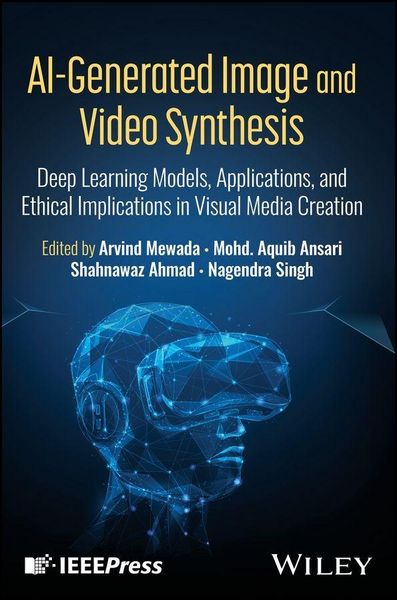
Ai-Generated Image and Video Synthesis Deep Learning Models, Applications, and Ethical Implications in Visual Media Creation
145,99 €
inkl. gesetzl. MwSt.,
Beschreibung
Produktdetails
Einband
Gebundene Ausgabe
Erscheinungsdatum
17.08.2026
Herausgeber
Arvind Mewada + weitereVerlag
WileySeitenzahl
192
Maße (L/B/H)
26,1/18,5/1,7 cm
Gewicht
526 g
Auflage
1. Auflage
Sprache
Englisch
ISBN
978-1-394-40311-0
Technical depth and ethical frameworks for AI visual media synthesis
Generative AI models for visual media are transforming virtual reality and biomedical imaging while raising urgent questions about deepfakes and misinformation. AI-Generated Image and Video Synthesis addresses both dimensions. A team of researchers provide algorithmic foundations alongside detection strategies, authentication methods, and regulatory analysis.
Coverage spans text-to-image generation, image-to-image translation, video synthesis, neural rendering, and 3D-aware generation. The book examines AI applications in CT, MRI synthetic data augmentation, and virtual staining for biomedical contexts. Case studies explore AI-assisted filmmaking, music videos, and style transfer. A dedicated chapter forecasts emerging trends including diffusion-transformer hybrids and autonomous generative agents.
Readers will also find:
- Comparative analyses of generative models including GANs, diffusion models, and transformers with implementation guidance and code repositories for hands-on experimentation
- Deepfake detection strategies and digital content authentication techniques addressing misinformation, intellectual property rights, and emerging regulatory frameworks worldwide
- Industry case studies demonstrating real-world deployments in creative industries, surveillance systems, education, and cultural preservation applications
- Biomedical imaging applications covering synthetic data generation for CT and MRI, virtual staining techniques, and data augmentation strategies
- Practical toolkits supporting implementation and evaluation of AI synthesis techniques across professional and academic contexts
Designed for AI researchers, computer vision engineers, and graduate students studying deep learning and image processing, this book connects theoretical principles with practical deployment. The combination of technical depth, application coverage, and ethical analysis makes it a comprehensive resource for professionals navigating AI-generated visual media.
Noch keine Bewertungen vorhanden
Verfassen Sie die erste Bewertung zu diesem Artikel
Helfen Sie anderen Kundinnen und Kunden durch Ihre Meinung.
Kurze Frage zu unserer Seite
Vielen Dank für Ihr Feedback
Wir nutzen Ihr Feedback, um unsere Produktseiten zu verbessern. Bitte haben Sie Verständnis, dass wir Ihnen keine Rückmeldung geben können. Falls Sie Kontakt mit uns aufnehmen möchten, können Sie sich aber gerne an unseren Kund*innenservice wenden.
zum Kundenservice