Beschreibung
Produktdetails
Einband
Gebundene Ausgabe
Erscheinungsdatum
20.08.2026
Abbildungen
XII, 315 p. 23 illus., 10 illus. in color.
Herausgeber
Natalia Wright + weitereVerlag
SpringerSeitenzahl
315
Maße (L/B/H)
24,1/16/2,4 cm
Gewicht
656 g
Sprache
Englisch
ISBN
978-3-032-27040-5
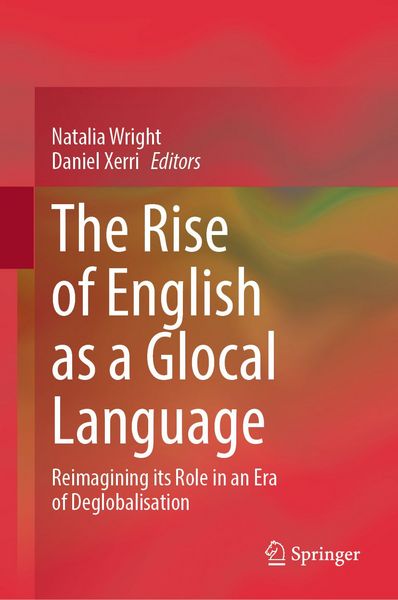
This edited volume highlights the growing recognition of the need for a more comprehensive understanding of language shaped by local contexts. It seeks to further conceptualise Global English(es) as localised language practices. Such practices illustrate how the English language is transformed to meet the needs of diverse communities, reflecting their social, cultural, and political values. Recognising that ‘glocality’ is a unique characteristic of today’s world, this volume expands upon the previously proposed conceptualisation of English as a Glocal Language (EGL)—one that is simultaneously global and local—to capture and accommodate the whole spectrum of cultural meanings and interpretations it is capable of conveying. This book is a useful resource for researchers, applied linguists, ELT professionals and practitioners, among others.
Testimonial for The Rise of English as a Glocal Language
Jennifer Jenkins, Emeritus Professor, University of Southampton UK
It is only rarely that a truly original and exciting publication appears within the broad field of the spread of English, but this edited volume is one such book. The editors and their contributors position the field not, as conventionally done, within global Englishes but within a ‘deglobalised’ glocal framework. As they demonstrate throughout, this is a far more appropriate perspective within which to explore the teaching of English around the world. The book’s raison d’être having been established in the introduction, the chapters that follow, based on new empirical research, range far across geographical contexts, and include rarely researched regions such as Pakistan and Israel/Palestine as well as original focuses, for example, composers in Latin America. Highly recommended for anyone interested in World Englishes, ELF, or ELT more widely.
Noch keine Bewertungen vorhanden
Verfassen Sie die erste Bewertung zu diesem Artikel
Helfen Sie anderen Kundinnen und Kunden durch Ihre Meinung.
Kurze Frage zu unserer Seite
Vielen Dank für Ihr Feedback
Wir nutzen Ihr Feedback, um unsere Produktseiten zu verbessern. Bitte haben Sie Verständnis, dass wir Ihnen keine Rückmeldung geben können. Falls Sie Kontakt mit uns aufnehmen möchten, können Sie sich aber gerne an unseren Kund*innenservice wenden.
zum Kundenservice