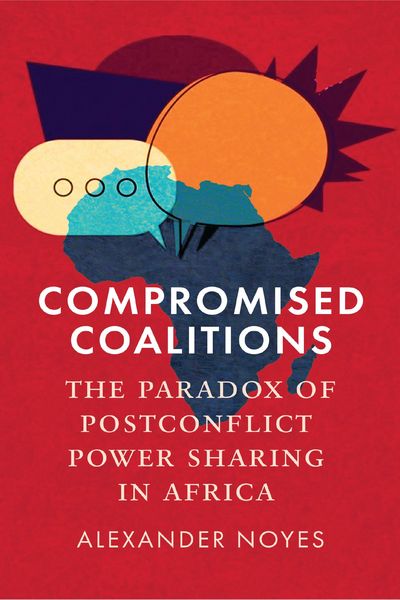
Compromised Coalitions The Paradox of Postconflict Power Sharing in Africa
-
- Einzelkauf Download ausgewählt
-
Sprache:Englisch
59,49 €
inkl. gesetzl. MwSt.Artikel erhalten
Beschreibung
Produktdetails
Format
ePUB
Kopierschutz
Nein
Family Sharing
Nein
Text-to-Speech
Ja
Erscheinungsdatum
28.07.2026
Verlag
University Of Pittsburgh PressSeitenzahl
192 (Printausgabe)
Dateigröße
1038 KB
Sprache
Englisch
EAN
9781512829617
A demonstration of how the negatives of power-sharing accords all-too-often outweigh the positives
Power-sharing pacts are a key tool for resolving wide-ranging violent conflicts, from Afghanistan to Zimbabwe, and with a particular concentration in sub-Saharan Africa. Historically tried in countries experiencing civil war, power sharing has been increasingly deployed to end less bloody and shorter conflicts like election violence. But does this tool actually work? Does postconflict power sharing mitigate conflict and deliver democratic reforms? Or are these elite pacts a form of coup that constrain democratic competition, allow losing incumbents to stay in power, and incentivize violence?
Both, it turns out. Despite their extensive use, the dynamics and outcomes of power-sharing accords after low-level conflicts have yet to be comprehensively examined. Here, in the first systematic investigation of postelection power sharing across Africa, political scientist Alexander Noyes argues that power sharing after election violence creates compromised coalitions. Noyes draws on a decade of research and a wealth of new primary data collected from more than 120 interviews with key decision-makers in three cases of externally brokered postelection pacts in Kenya, Togo, and Zimbabwe over the 2006-2013 period. He examines a topical policy issue using scholarly research methods and tools to bridge the gap between theory and practice and to provide a guide to better understand a frequently used but often misunderstood conflict resolution tool.
Contrary to conventional academic wisdom, Compromised Coalitions ultimately shows that postconflict pacts-while often riddled with challenges and difficult compromises-can deliver some lasting democratic reforms, under certain conditions. Yet the book also unequivocally argues that these unity governments are inherently compromised at their creation. Because their negatives outweigh their positives and the conditions for success are often all too rare in the real world, policymakers must rethink their current default use of the model and change their practices to deploy it much more cautiously and sparingly.
Noch keine Bewertungen vorhanden
Verfassen Sie die erste Bewertung zu diesem Artikel
Helfen Sie anderen Kundinnen und Kunden durch Ihre Meinung.
Kurze Frage zu unserer Seite
Vielen Dank für Ihr Feedback
Wir nutzen Ihr Feedback, um unsere Produktseiten zu verbessern. Bitte haben Sie Verständnis, dass wir Ihnen keine Rückmeldung geben können. Falls Sie Kontakt mit uns aufnehmen möchten, können Sie sich aber gerne an unseren Kund*innenservice wenden.
zum Kundenservice