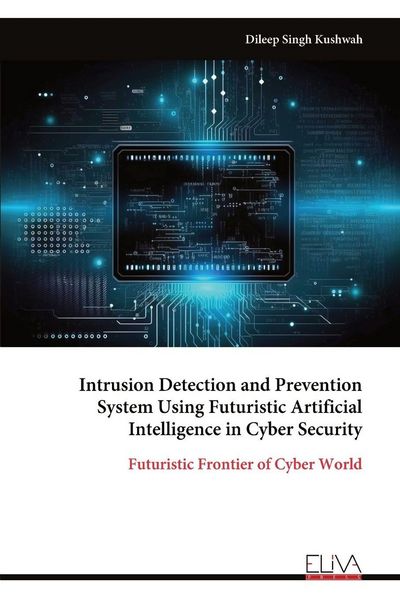
Intrusion Detection and Prevention System Using Futuristic Artificial Intelligence in Cyber Security Futuristic Frontier of Cyber World
-
- Englisch ausgewählt
57,99 €
inkl. gesetzl. MwSt.,
Beschreibung
Produktdetails
Einband
Taschenbuch
Erscheinungsdatum
21.07.2026
Verlag
Eliva PressSeitenzahl
146
Maße (L/B/H)
22,9/15,2/0,8 cm
Gewicht
223 g
Sprache
Englisch
EAN
9789999342261
In cyber security, where threats are always evolving, state-of-the-art protections for digital infrastructures are of the utmost importance. The growing sophistication and regularity of cyber assaults makes traditional intrusion detection and prevention methods inadequate in protecting networks and systems. The integration of state-of-the-art AI into intrusion detection and prevention systems (IDPS) has been a tremendous boon in the battle against existing and future cyber dangers. Artificial intelligence (AI)-driven systems may learn from patterns, adapt to new dangers, and autonomously respond to events, providing a dynamic layer of protection that traditional static systems cannot match. Integrating AI into IDPS allows for a shift from a reactive to a proactive and predictive approach. Systems powered by AI can distinguish anomalies, anticipate attacks, and react in real-time, in contrast to traditional systems that rely mostly on predefined signatures and rules. Systems may differentiate between safe and dangerous patterns of behavior with the use of machine learning algorithms, particularly supervised and unsupervised learning models. With the help of AI, intelligent detection and prevention systems can keep a close eye on system operations, user activities, and network traffic in real-time, searching for any signs of intrusion, no matter how subtle. A lower risk of injury results from these abilities since they drastically reduce the amount of time needed to identify threats. Artificial intelligence models of the future will train themselves using enormous amounts of data, both historical and real-time, to increase their intelligence and precision. Using RNNs and other deep learning models with CNNs is a crucial component in enhancing IDPS's detection capabilities. Complex data correlations and patterns may be exposed by these models, which are typically imperceptible to traditional systems and human analysts. The speed and size with which AI systems can process and analyze data makes it possible to quickly identify and eliminate even the most minor threats.
Noch keine Bewertungen vorhanden
Verfassen Sie die erste Bewertung zu diesem Artikel
Helfen Sie anderen Kundinnen und Kunden durch Ihre Meinung.
Kurze Frage zu unserer Seite
Vielen Dank für Ihr Feedback
Wir nutzen Ihr Feedback, um unsere Produktseiten zu verbessern. Bitte haben Sie Verständnis, dass wir Ihnen keine Rückmeldung geben können. Falls Sie Kontakt mit uns aufnehmen möchten, können Sie sich aber gerne an unseren Kund*innenservice wenden.
zum Kundenservice