Neu
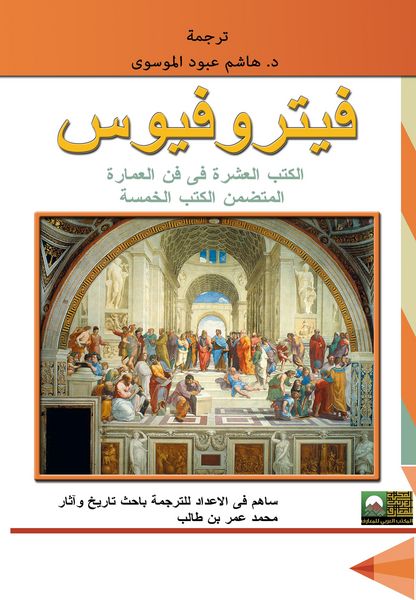
Vitruvius - The Ten Books on Architecture
-
- Einzelkauf Download ausgewählt
-
Sprache:Arabisch
6,99 €
inkl. gesetzl. MwSt.Beschreibung
Produktdetails
Format
ePUB 3
Kopierschutz
Nein
Family Sharing
Ja
Text-to-Speech
Ja
Erscheinungsdatum
28.07.2026
Verlag
¿¿¿¿¿¿ ¿¿¿¿¿¿ ¿¿¿¿¿¿¿Seitenzahl
172 (Printausgabe)
Dateigröße
4960 KB
Übersetzt von
Hashem Aboud Al-Moussous
Sprache
Arabisch
EAN
9789772768660
(Vitruvius: The First Teacher of Architecture)
While historians consider the Greek philosopher Plato the first theorist of urban planning, many believe that the Roman Vitruvius was the first theorist of architecture. However, philosophers have largely overlooked architectural theory in the Roman era, and they consider this diligent scholar one of the first teachers of architecture. In his first book on the scientific formation of the architect, he emphasized the necessity of a mastery of philosophy, history, natural sciences, mathematics, law, astronomy, medicine, and music, in addition to drawing and practical skills. He likened the architect to a conductor of an orchestra, guiding the work with harmony and integration. He also considered architecture the mother of the arts.
Thus, his ten books, which we present today to the Arab reader and student for the first time, encompass all philosophical, theoretical, applied, structural, and planning aspects. They later became a reference for subsequent generations, and were used by both Alberti and Palladio during the Renaissance. The ten parts of Vitruvius's collection of books included six fundamental principles of architecture, which we will list in this brief introduction as follows: The theory of form with proportions inspired by nature and human scale, including the use of the standard unit (the longitudinal module) in all parts of the building. Then, organizing the relationship between the floor plan and the facades. Relying on logic in design or planning. Also, organizing the relationship between the solid and open parts of the building. This also includes utilizing and respecting the site and taking advantage of natural resources. Finally, he addressed the economic aspect, represented by the optimal organization of the site, the use of materials, and the suitability of the building to the required needs.
While historians consider the Greek philosopher Plato the first theorist of urban planning, many believe that the Roman Vitruvius was the first theorist of architecture. However, philosophers have largely overlooked architectural theory in the Roman era, and they consider this diligent scholar one of the first teachers of architecture. In his first book on the scientific formation of the architect, he emphasized the necessity of a mastery of philosophy, history, natural sciences, mathematics, law, astronomy, medicine, and music, in addition to drawing and practical skills. He likened the architect to a conductor of an orchestra, guiding the work with harmony and integration. He also considered architecture the mother of the arts.
Thus, his ten books, which we present today to the Arab reader and student for the first time, encompass all philosophical, theoretical, applied, structural, and planning aspects. They later became a reference for subsequent generations, and were used by both Alberti and Palladio during the Renaissance. The ten parts of Vitruvius's collection of books included six fundamental principles of architecture, which we will list in this brief introduction as follows: The theory of form with proportions inspired by nature and human scale, including the use of the standard unit (the longitudinal module) in all parts of the building. Then, organizing the relationship between the floor plan and the facades. Relying on logic in design or planning. Also, organizing the relationship between the solid and open parts of the building. This also includes utilizing and respecting the site and taking advantage of natural resources. Finally, he addressed the economic aspect, represented by the optimal organization of the site, the use of materials, and the suitability of the building to the required needs.
Noch keine Bewertungen vorhanden
Verfassen Sie die erste Bewertung zu diesem Artikel
Helfen Sie anderen Kundinnen und Kunden durch Ihre Meinung.
Kurze Frage zu unserer Seite
Vielen Dank für Ihr Feedback
Wir nutzen Ihr Feedback, um unsere Produktseiten zu verbessern. Bitte haben Sie Verständnis, dass wir Ihnen keine Rückmeldung geben können. Falls Sie Kontakt mit uns aufnehmen möchten, können Sie sich aber gerne an unseren Kund*innenservice wenden.
zum Kundenservice