• Produktbild: Grounding Education in Environmental Humanities
  • Produktbild: Grounding Education in Environmental Humanities

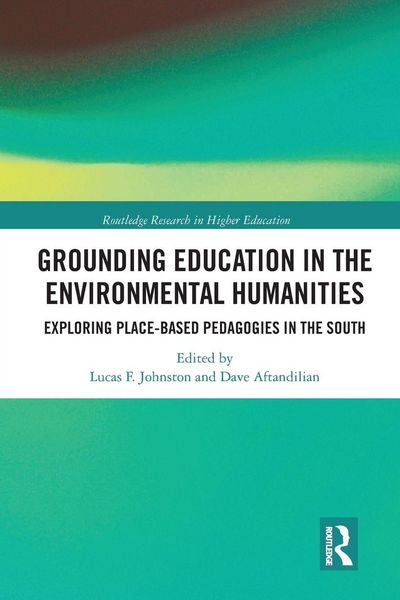
Grounding Education in Environmental Humanities Exploring Place-Based Pedagogies in the South

71,99 €

inkl. gesetzl. MwSt., Versandkostenfrei


Beschreibung

Produktdetails

Einband

Taschenbuch

Erscheinungsdatum

30.06.2020

Herausgeber

Lucas Johnston + weitere

Verlag

Taylor and Francis

Seitenzahl

214

Maße (L/B/H)

22,9/15,2/1,2 cm

Gewicht

453 g

Sprache

Englisch

ISBN

978-0-367-58370-5

Beschreibung

Produktdetails

Einband

Taschenbuch

Erscheinungsdatum

30.06.2020

Herausgeber

Verlag

Taylor and Francis

Seitenzahl

214

Maße (L/B/H)

22,9/15,2/1,2 cm

Gewicht

453 g

Sprache

Englisch

ISBN

978-0-367-58370-5

Herstelleradresse

Libri GmbH
Europaallee 1
36244 Bad Hersfeld
DE

Email: gpsr@libri.de

Kundinnen und Kunden meinen

0 Bewertungen

Informationen zu Bewertungen

Zur Abgabe einer Bewertung ist eine Anmeldung im Konto notwendig. Die Authentizität der Bewertungen wird von uns nicht überprüft. Wir behalten uns vor, Bewertungstexte, die unseren Richtlinien widersprechen, entsprechend zu kürzen oder zu löschen.

Die Bewertungen sind nach Format, Anzahl Sterne und Datum sortiert.

Verfassen Sie die erste Bewertung zu diesem Artikel

Helfen Sie anderen Kund*innen durch Ihre Meinung

Kundinnen und Kunden meinen

0 Bewertungen filtern

Die Leseprobe wird geladen.
  • Produktbild: Grounding Education in Environmental Humanities
  • Produktbild: Grounding Education in Environmental Humanities
  • 1. Joseph Witt, "Introducing Place-Based Pedagogy and ‘the South’"


    Part One: PLACE, THEOLOGY, PRACTICE


    2. Dave Aftandilian, "Connecting Students (and Faculty) to Place and Animals through Contemplative Practices"


    3. Field Trip: J. Albert Nungaray, "The Star on the Mountain: Using Hands-On Experience of Native American Stories and Technologies to Teach Children about Place, Culture, and Self"


    4. Jennifer R. Ayres, "Memories of Home: Theological Education, Place-Based Pedagogy, and Inhabitance"


    5. Jill Y. Crainshaw, "Teaching the Sacraments through Profane Experiences"


    Part Two: ENGAGING WITH COMMUNITY THROUGH PLACE


    6. Lucas Johnston, "Placing Pedagogy and Sustainability in the Piedmont: Faculty and Student Engagement"


    7. Field Trip: Lisa Blee, "Making Incarceration Visible: An Adventure in Shared Authority"


    8. Eric E. Jones, "Why Do We Live Where We Do? Teaching Native American Cultural History and Anthropology in the North Carolina Piedmont"


    9. Field Trip: Albert Meier, "Deep History of the Green River Preserve"


    Part Three: WOUNDED PLACES, HEALING PLACES


    10. Thomas Hallock, "Towards a New Kind of Piety: City Creeks, Place Making, and Lapsed Environmental Discourse on Florida’s Gulf Coast"


    11. Field Trip: A. Whitney Sanford, "Navigating Uncomfortable Waters: Florida’s Talbot Islands and the Kingsley Plantation"


    12. Charles Barber, "Teaching about Religion and HIV/AIDS among Black Men Who Have Sex with Men in Atlanta, Georgia"


    Part Four: ASSESSING, CONCLUDING, MOVING FORWARD


    13. Field Trip: Rebekka King, "Intersections of Would, Can, and Will: What to Do When White Supremacists Come to Town"


    14. Bobbi Patterson, "Pathway for Place-Based Pedagogies: A Pliable Taxonomy for Course Design and Assessment"


    15. Field Trip: Dave Aftandilian, Meredith Doster, Lucas Johnston, Bella Mukonyora, A. Whitney Sanford, and Joseph Witt, "From Local Places to Global Networks: Front Porch Conversation at the Green River Preserve in Kentucky, May 2015"


    16. Lucas Johnston and Dave Aftandilian, "Conclusion: Principles for Teaching about Place in the South"


    Contributors