Beschreibung
Produktdetails
Format
ePUB
Kopierschutz
Ja
Family Sharing
Ja
Text-to-Speech
Ja
Erscheinungsdatum
18.01.2024
Verlag
Fiction4AllSeitenzahl
(Printausgabe)
Dateigröße
414 KB
Sprache
Englisch
EAN
9798215353554
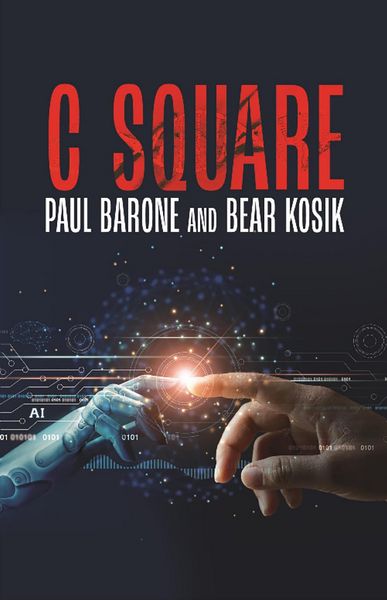
An eighteen-year-old enters a bunker in western Massachusetts. She reawakens an emergent behavior artificial intelligence placed in the vault five days after she was born. The machine introduces itself as Arthur; she was intended to resurrect the AI after it had been murdered by its creator, Adam Eli Nilo, her maternal grandfather's father. Dr. Nilo's efforts to save humanity from self-destruction using advanced technologies such as AI and genetic manipulation all lead to more problems than solutions and ultimately lead him to a mental breakdown. His story is interwoven with the experiences of his two children, who use technologies in far more mundane, yet equally unsuccessful ways. Dr. Nilo's son, Benjamin Rodgers Nilsson, is the result of Nilo succumbing to the advances of a lonely neighbor when they were both sixteen. Ben's personal journal entries begin when he buys a voice-recognition device that can translate his words into clean text for his eighteenth birthday. The entries are revealed in reverse order so that the first one encountered is the one he makes on his granddaughter's eighteenth birthday in 2101. Along the way, we learn how technologies have affected people such as Ben but, in the end, have done little to enhance their lives. Dr. Nilo's only legally recognized child, Susannah, is the product of the process he developed with the aid of Arthur to perfect humans. Susannah's story describes the six months in 2083 leading to the birth of Ben's granddaughter and Arthur's murder. She has been kept in the dark about being a C Square, a person whose two gametes were chosen by Arthur to meet specific criteria aimed at creating a perfected human being. Susannah ultimately learns her true heritage and identity just as it becomes impossible for her to access the resources she would need to fully understand her place as a second Eve. The same themes in Mary Shelley's Frankenstein frame the whole: the consequences of humans using technological methods that circumvent nature; the futility of technological progress as a substitute for human development; and the alienation of creations from their creators, even when those creations are biological children, and their creator is an unknown parent. The story concludes with Arthur telling the teenager that humans create gods who they say created them. Gods do not have the power to create anything. However, they can be omniscient and therefore far beyond the capacity of their human creators, just as Arthur is.
Kundinnen und Kunden meinen
Verfassen Sie die erste Bewertung zu diesem Artikel
Helfen Sie anderen Kund*innen durch Ihre Meinung
Kurze Frage zu unserer Seite
Vielen Dank für Ihr Feedback
Wir nutzen Ihr Feedback, um unsere Produktseiten zu verbessern. Bitte haben Sie Verständnis, dass wir Ihnen keine Rückmeldung geben können. Falls Sie Kontakt mit uns aufnehmen möchten, können Sie sich aber gerne an unseren Kund*innenservice wenden.
zum Kundenservice